
Air Compressor Maintenance Checklist: Complete Guide to Improve Efficiency and Reduce Downtime
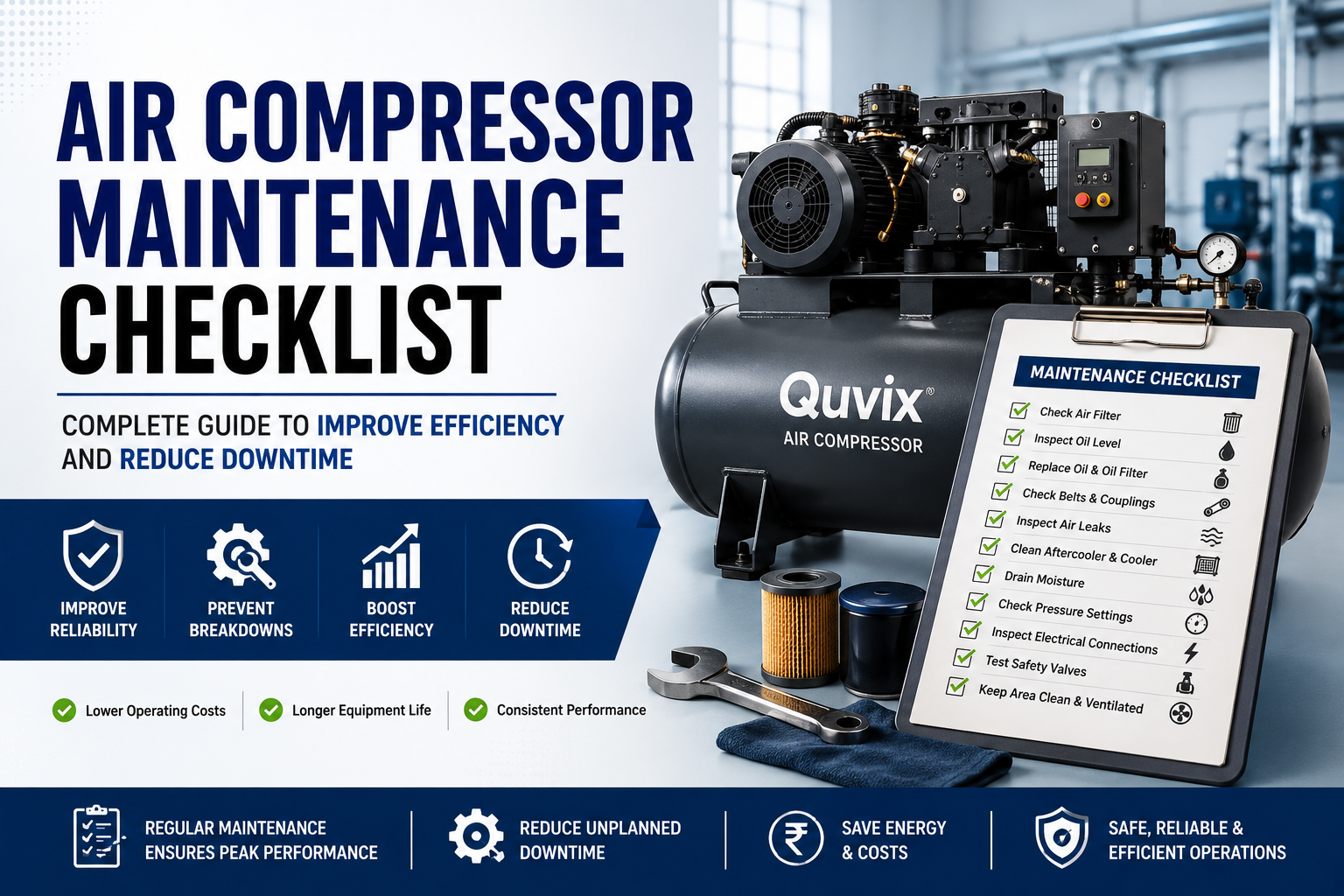
Air Compressor Maintenance Checklist: Complete Guide to Improve Efficiency and Reduce Downtime
Proper maintenance plays a critical role in ensuring the efficiency, reliability, and longevity of industrial air compressors. Whether you operate a rotary screw compressor or a piston compressor, regular inspection and preventive maintenance can significantly reduce downtime, lower operating costs, and improve overall system performance.
Neglecting routine maintenance often leads to unexpected breakdowns, increased energy consumption, and expensive repairs. In many industries, even a few hours of compressor downtime can disrupt production and result in substantial financial losses.
Following a structured air compressor maintenance checklist helps businesses identify potential issues before they become major problems. Regular servicing also improves energy efficiency and extends the lifespan of critical components.
In this guide, we’ll cover essential air compressor maintenance practices, preventive maintenance schedules, and expert tips to help maximize compressor performance and ensure reliable operation.
Why Air Compressor Maintenance Is Important
Industrial air compressors are among the most heavily utilized machines in manufacturing facilities. Without proper maintenance, system efficiency gradually declines, leading to higher electricity consumption and increased wear on internal components.
A preventive maintenance program offers several benefits:
- Improved energy efficiency
- Reduced operating costs
- Fewer unexpected breakdowns
- Longer equipment lifespan
- Better air quality
- Increased productivity
According to Atlas Copco, compressed air systems require regular maintenance to maintain peak efficiency and minimize unplanned downtime.
Daily Air Compressor Maintenance Checklist
Performing daily inspections can help detect problems early and prevent costly repairs.
Check Operating Pressure
Monitor system pressure and ensure it remains within the recommended operating range. Abnormal pressure readings may indicate leaks or component issues.
Inspect Oil Levels
For oil-lubricated compressors, check oil levels regularly and ensure adequate lubrication for smooth operation.
Drain Moisture from the Air Receiver Tank
Condensation can accumulate inside the tank and lead to corrosion. Draining moisture daily helps maintain system reliability.
Listen for Unusual Noises
Unusual vibrations or sounds may indicate loose components, bearing wear, or internal damage.
Check for Air Leaks
Compressed air leaks increase energy consumption and reduce system efficiency. Inspect hoses, fittings, and pipelines regularly.
Weekly Air Compressor Maintenance Checklist
Weekly inspections help maintain consistent compressor performance and prevent long-term damage.
Inspect Air Filters
Dirty filters restrict airflow and force the compressor to work harder, increasing energy consumption.
Examine Belts and Couplings
Check belts for wear, cracks, or improper tension. Replace damaged components promptly.
Inspect Safety Valves
Safety valves protect the compressor from excessive pressure. Ensure they operate correctly and remain free from blockages.
Clean External Components
Dust and dirt buildup can affect cooling efficiency. Keeping external surfaces clean improves heat dissipation and reliability.
Inspect Electrical Connections
Loose or damaged electrical connections may cause overheating and unexpected failures.
Monthly Air Compressor Maintenance Checklist
Monthly preventive maintenance ensures optimal performance and helps avoid major breakdowns.
Replace Oil Filters
Oil filters remove contaminants and protect internal components. Replace them according to manufacturer recommendations.
Inspect the Cooling System
Check coolers and ventilation systems to ensure efficient heat removal.
Tighten Connections and Fittings
Loose fittings may result in air leaks and reduced efficiency.
Test Safety Devices
Verify that pressure switches, gauges, and safety mechanisms are functioning properly.
Analyze Compressor Performance
Monitor operating temperatures, pressure levels, and energy consumption to identify any performance issues.
In the next section, we’ll cover quarterly and annual maintenance schedules, common air compressor problems, troubleshooting tips, and best practices for maximizing compressor efficiency.
Quarterly Air Compressor Maintenance Checklist
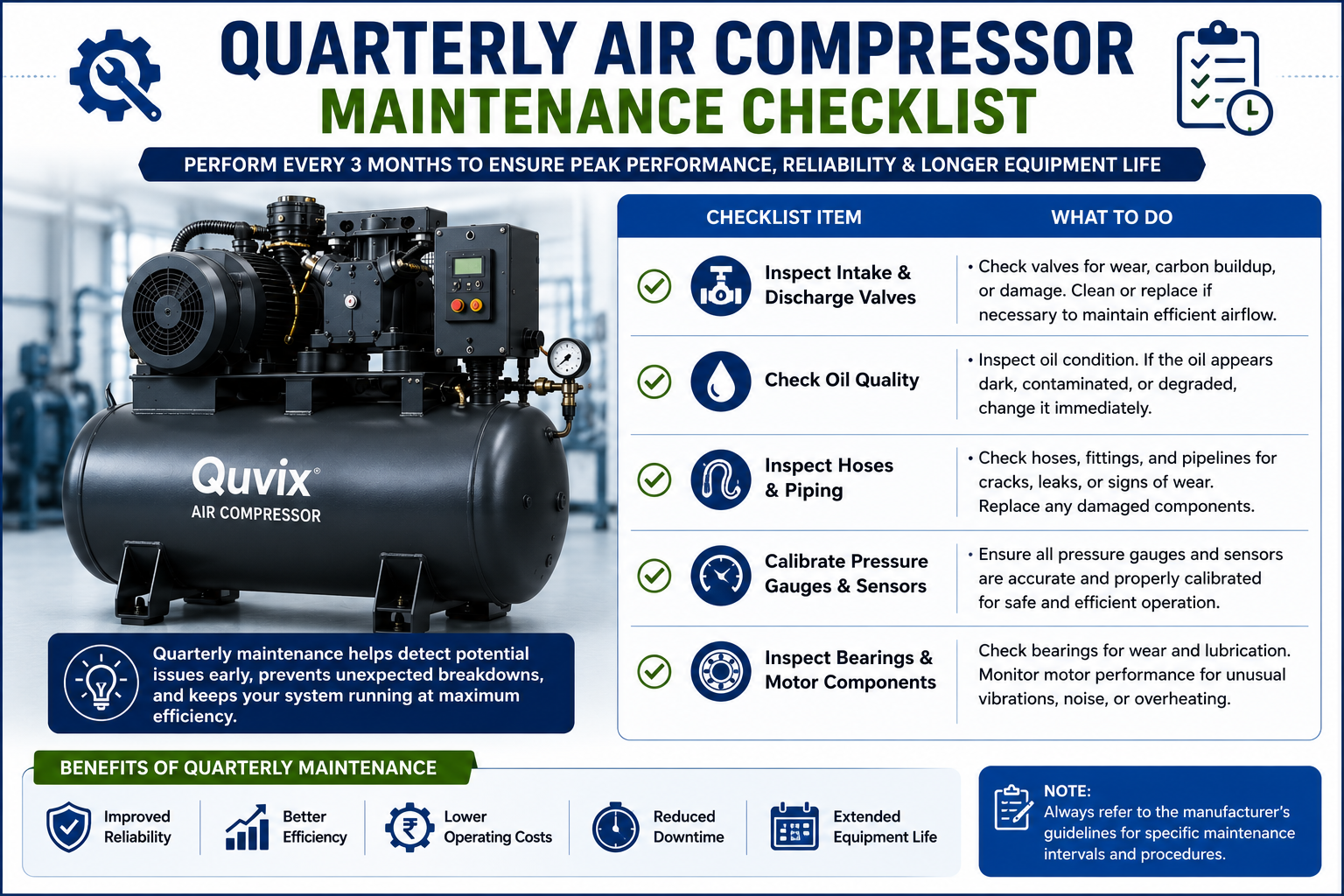
Quarterly maintenance involves a deeper inspection of the compressor system to ensure long-term reliability and peak performance.
Inspect Intake and Discharge Valves
Valves play a critical role in maintaining airflow efficiency. Check for wear, carbon buildup, or damage and replace components if necessary.
Check Oil Quality
For oil-lubricated compressors, inspect oil condition regularly. If the oil appears contaminated or degraded, replace it immediately to prevent internal damage.
Inspect Hoses and Piping
Examine hoses, fittings, and pipelines for cracks, leaks, or signs of wear. Damaged components can reduce system efficiency and increase operating costs.
Calibrate Pressure Gauges and Sensors
Accurate pressure readings are essential for maintaining safe and efficient operation. Ensure gauges and sensors are properly calibrated.
Inspect Bearings and Motor Components
Check bearings for excessive wear and monitor motor performance. Unusual vibrations or overheating may indicate potential problems.
Annual Air Compressor Maintenance Checklist
Annual maintenance should be performed by qualified technicians to ensure comprehensive system evaluation and maximum reliability.
Conduct a Complete System Inspection
Inspect all major components, including the air end, motor, coolers, valves, and electrical systems.
Replace Air Filters and Oil Filters
Replacing filters annually helps maintain optimal airflow and improve compressor efficiency.
Inspect and Clean the Air End
The air end is one of the most important components of the compressor. Regular cleaning and inspection help extend equipment life.
Inspect Electrical Components
Check wiring, relays, contactors, and overload protection systems to ensure safe operation.
Analyze System Performance
Evaluate energy consumption, pressure stability, and airflow requirements to identify opportunities for improving efficiency.
Common Air Compressor Problems and Solutions
Even well-maintained compressors may occasionally experience operational issues. Early detection can help prevent costly breakdowns.
High Energy Consumption
Possible Causes
- Dirty air filters
- Air leaks
- Incorrect pressure settings
Replace Air Filters and Oil Filters
Solution
Clean or replace filters, repair leaks, and optimize system pressure.
High Discharge Temperature
Possible Causes
- Poor ventilation
- Low oil levels
- Cooler blockage
Solution
Improve ventilation, check oil levels, and clean cooling components.
Low Air Pressure
Possible Causes
- Air leaks
- Clogged filters
- Worn valves
Solution
Repair leaks and replace damaged components.
Excessive Moisture in the System
Possible Causes
- High humidity
- Improper drainage
- Faulty air dryers
Solution
Drain moisture regularly and ensure air treatment equipment is functioning properly.
Unusual Noise or Vibration
Possible Causes
- Loose components
- Bearing wear
- Misalignment
Solution
Inspect and tighten components and replace damaged bearings when required.
Best Practices for Air Compressor Maintenance
Following best practices helps maximize efficiency and extend equipment lifespan.
Follow the Manufacturer's Maintenance Schedule
Always adhere to recommended service intervals and maintenance guidelines.
Use Genuine Spare Parts
High-quality replacement components ensure reliable performance and reduce the risk of failures.
Maintain Proper Ventilation
Adequate airflow around the compressor helps prevent overheating and improves efficiency.
Keep Maintenance Records
Maintaining service logs helps track equipment condition and identify recurring issues.
Train Operators
Well-trained personnel can detect early warning signs and prevent major failures.
Monitor Compressor Performance
Regular monitoring of pressure, temperature, and energy consumption helps optimize system efficiency.
Conclusion
Regular maintenance is essential for ensuring the reliability, efficiency, and longevity of industrial air compressors. By following a structured air compressor maintenance checklist, businesses can reduce downtime, lower operating costs, and improve overall productivity.
Preventive maintenance not only extends equipment life but also helps avoid unexpected breakdowns and costly repairs. Investing in routine servicing today can deliver significant long-term benefits and ensure uninterrupted operation of your compressed air system.