
Oil-Free Air Compressor vs. Oil-Lubricated Air Compressor: Which One Should You Choose?
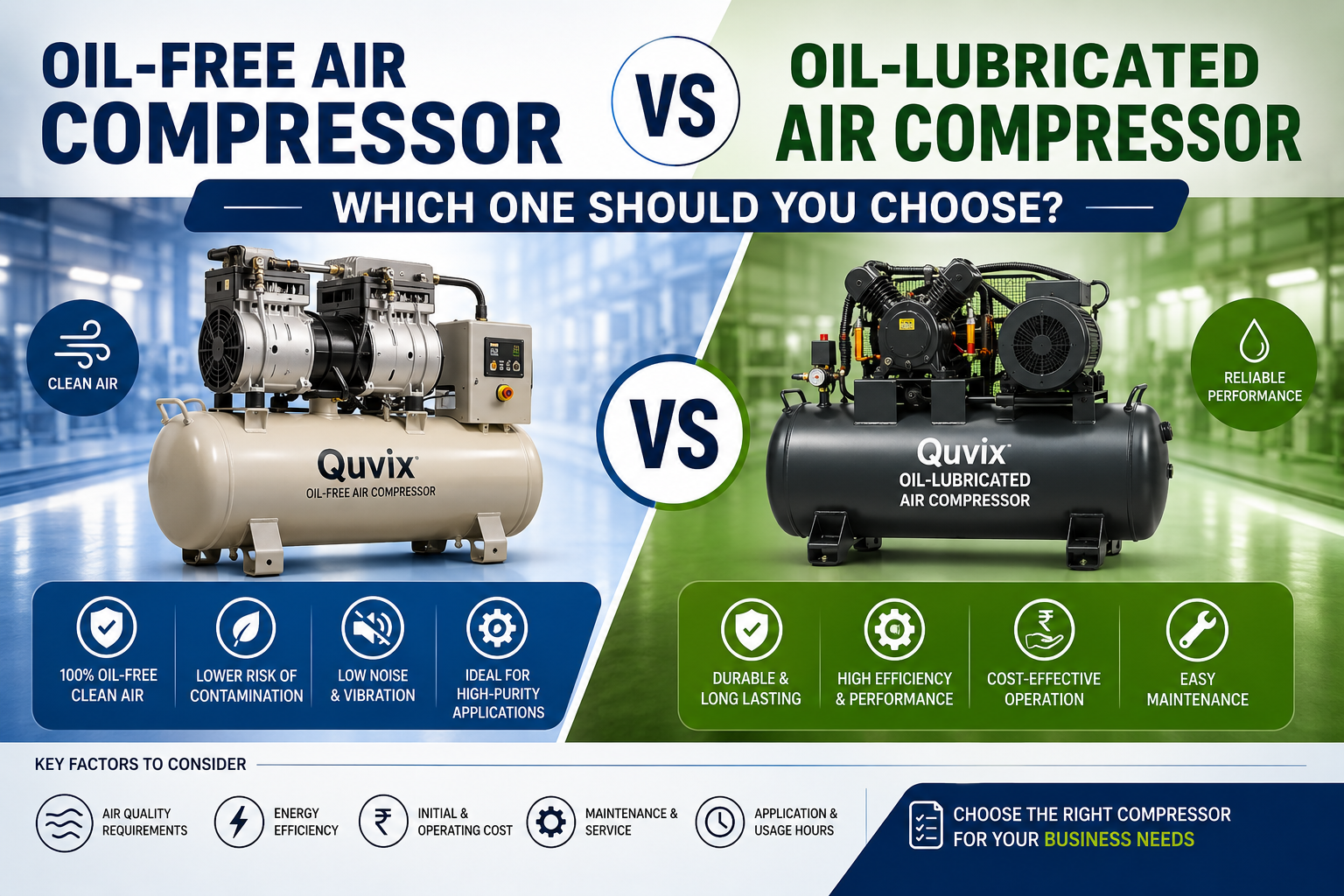
Oil-Free Air Compressor vs Oil-Lubricated Air Compressor: Which One Should You Choose?
Selecting the right air compressor is essential for ensuring operational efficiency, product quality, and long-term cost savings. Among the various compressor technologies available today, oil-free and oil-lubricated air compressors are two of the most widely used options across industrial and commercial applications.
While both types are designed to provide compressed air, they differ significantly in terms of air purity, maintenance requirements, operating costs, and suitability for specific industries. Choosing the wrong compressor can lead to increased downtime, higher maintenance expenses, and even contamination issues in sensitive applications.
So, which one should you choose?
The answer depends on your industry requirements, air quality standards, budget, and operating conditions. Understanding the differences between these two technologies can help businesses make informed decisions and maximize their return on investment.
In this guide, we’ll compare oil-free air compressors and oil-lubricated air compressors based on performance, air quality, maintenance, energy efficiency, operating costs, and industrial applications to help you select the right compressed air solution.
According to Atlas Copco, compressed air is often referred to as the fourth utility in modern industry because of its widespread use across manufacturing, pharmaceutical, food processing, and engineering applications.
What Is an Oil-Free Air Compressor?
An oil-free air compressor is designed to produce compressed air without using oil inside the compression chamber. Since no oil comes into contact with the compressed air, these compressors deliver clean and contamination-free air that meets strict quality standards.
Oil-free compressors are commonly used in industries where air purity is critical and even the smallest traces of oil contamination can affect product quality or safety.
How Does an Oil-Free Air Compressor Work?
Unlike conventional compressors, oil-free compressors use specially designed components and advanced coating technologies to minimize friction and ensure smooth operation without the need for lubrication inside the compression chamber.
This design allows the compressor to deliver high-quality compressed air while reducing the risk of contamination.
Advantages of Oil-Free Air Compressors
Clean and Contamination-Free Air
Oil-free compressors provide pure compressed air, making them suitable for sensitive industrial processes.
Compliance with Industry Standards
Many industries require ISO-certified oil-free air to ensure product quality and regulatory compliance.
Environmentally Friendly Operation
Since there is no oil carryover, oil-free compressors contribute to a cleaner and more sustainable operating environment.
Reduced Risk of Product Contamination
Oil contamination can damage products and lead to costly recalls. Oil-free compressors eliminate this risk.
Common Applications of Oil-Free Air Compressors
Oil-free compressors are widely used in:
- Pharmaceutical industry
- Food and beverage processing
- Healthcare facilities
- Electronics manufacturing
- Semiconductor industries
- Laboratories
What Is an Oil-Lubricated Air Compressor?
Oil-lubricated air compressors use oil to lubricate internal moving components and reduce friction during the compression process. These compressors are known for their durability, efficiency, and ability to handle demanding industrial applications.
Because oil helps dissipate heat and protect components from wear, oil-lubricated compressors generally offer longer service life and excellent reliability.
How Does an Oil-Lubricated Air Compressor Work?
In oil-lubricated compressors, lubricating oil circulates throughout the system to cool, seal, and protect moving components. Air and oil are separated before the compressed air reaches the outlet, ensuring efficient operation.
Advantages of Oil-Lubricated Air Compressors
High Efficiency
These compressors provide reliable performance and are capable of operating continuously under demanding conditions.
Longer Service Life
Lubrication reduces wear and tear, helping extend the lifespan of the compressor.
Lower Initial Investment
Oil-lubricated compressors are generally more affordable than oil-free models.
Suitable for Heavy-Duty Applications
Their robust design makes them ideal for continuous industrial operations.
Common Applications of Oil-Lubricated Air Compressors
Oil-lubricated compressors are commonly used in:
- Manufacturing plants
- Automotive industries
- Engineering workshops
- Construction sites
- Textile industries
- Packaging facilities
In the next section, we’ll compare oil-free and oil-lubricated air compressors based on air quality, energy efficiency, maintenance requirements, operating costs, lifespan, and industrial applications to determine which option is best for your business.
Oil-Free Air Compressor vs Oil-Lubricated Air Compressor: Key Differences
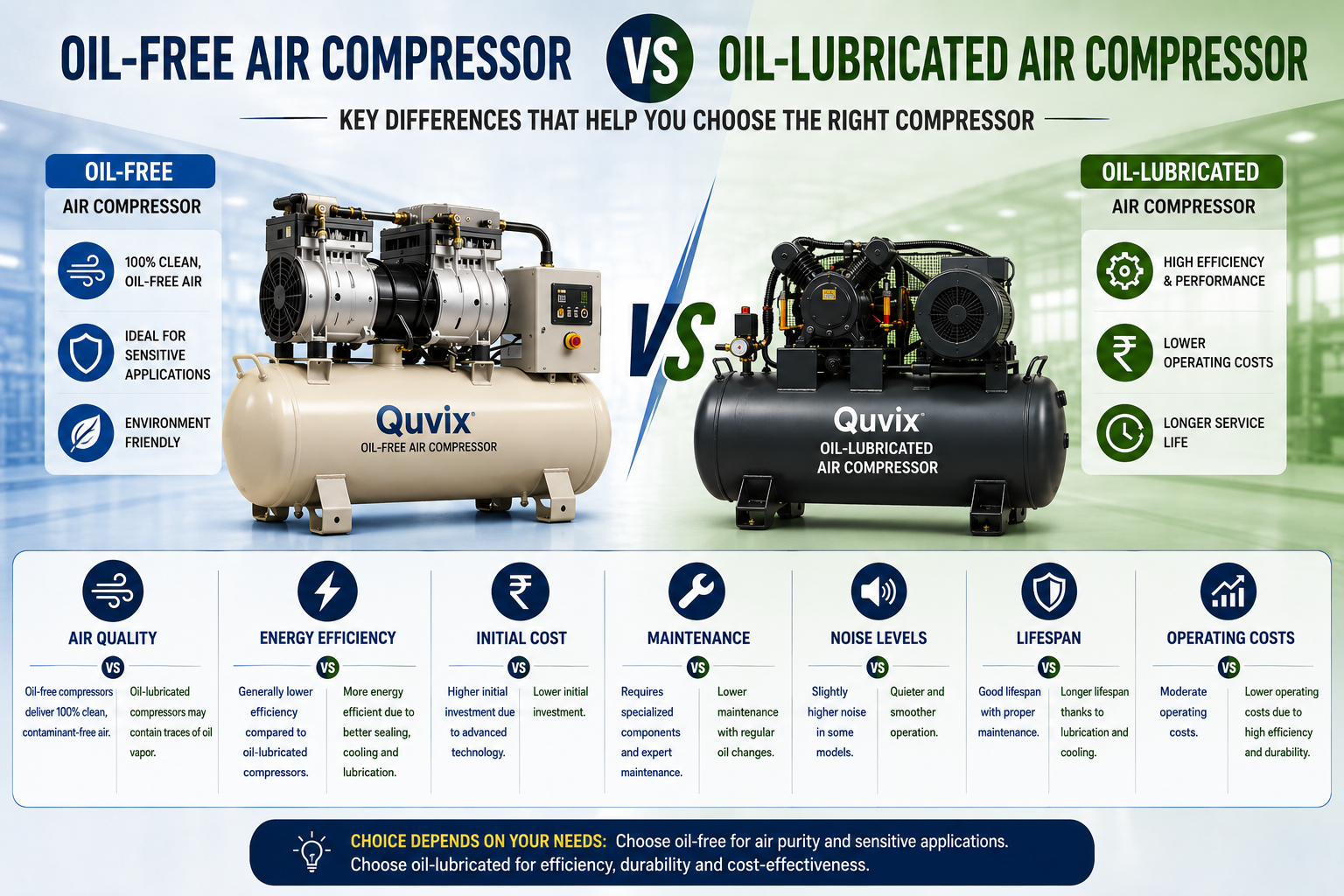
Although both oil-free and oil-lubricated air compressors are designed to provide compressed air, they differ significantly in terms of air quality, efficiency, maintenance, and operating costs. Understanding these differences can help businesses select the most suitable compressor for their applications.
Air Quality
Air quality is one of the most important factors when choosing an air compressor.
Oil-free air compressors deliver clean and contamination-free air because no oil comes into contact with the compressed air. This makes them ideal for industries where product quality and safety are critical.
Oil-lubricated compressors, on the other hand, use oil for cooling and lubrication. Although filtration systems help remove oil particles, traces of oil vapor may still remain.
Winner: Oil-Free Air Compressor
For applications requiring the highest level of air purity, oil-free compressors are the preferred choice.
Energy Efficiency
Modern oil-lubricated compressors are generally more energy-efficient because oil helps seal internal components and reduce friction.
Oil-free compressors may consume slightly more energy depending on the design and operating conditions.
Winner: Oil-Lubricated Air Compressor
Businesses focused on energy savings and continuous operation often prefer oil-lubricated systems.
Initial Cost
Oil-free compressors involve advanced technologies and specialized materials, which usually result in higher upfront costs.
Oil-lubricated compressors are more affordable and offer a lower initial investment.
Winner: Oil-Lubricated Air Compressor
For businesses with budget constraints, oil-lubricated compressors provide a cost-effective solution.
Maintenance Requirements
Oil-free compressors eliminate the need for oil changes but may require specialized components and servicing.
Oil-lubricated compressors require regular oil changes and periodic maintenance to ensure reliable operation.
Winner: Depends on Application
Oil-free compressors reduce oil-related maintenance, while oil-lubricated compressors benefit from readily available service support.
Noise Levels
Oil-lubricated compressors generally operate more smoothly and quietly due to the lubricating effect of oil.
Some oil-free compressors may generate higher noise levels, especially at high operating speeds.
Winner: Oil-Lubricated Air Compressor
For environments where low noise is important, oil-lubricated compressors often provide better comfort.
Lifespan
Proper lubrication reduces friction and wear, allowing oil-lubricated compressors to achieve longer service life under demanding operating conditions.
Oil-free compressors also offer excellent durability but may experience faster wear in certain high-load applications.
Winner: Oil-Lubricated Air Compressor
For heavy-duty industrial use, oil-lubricated compressors generally provide longer lifespan and reliability.
Operating Costs
Oil-free compressors eliminate oil-related expenses but may have higher component replacement costs.
Oil-lubricated compressors require regular maintenance and oil changes, but their higher efficiency often helps reduce operating expenses.
Winner: Depends on Usage
The total cost of ownership depends on operating hours, energy consumption, and maintenance requirements.
Comparison Table: Oil-Free Air Compressor vs Oil-Lubricated Air Compressor
| Parameter | Oil-Free Air Compressor | Oil-Lubricated Air Compressor |
|---|---|---|
| Air Quality | 100% Clean and Oil-Free | May Contain Oil Traces |
| Energy Efficiency | Moderate | High |
| Initial Cost | Higher | Lower |
| Maintenance | Specialized Components | Regular Oil Changes Required |
| Noise Levels | Moderate | Lower |
| Lifespan | High | Longer |
| Operating Costs | Moderate | Lower |
| Best Applications | Pharmaceutical, Food & Beverage, Electronics | Manufacturing, Automotive, Engineering |
Which Compressor Is Best for Different Industries?
Pharmaceutical Industry
Pharmaceutical manufacturers require contamination-free compressed air to maintain product quality and comply with strict regulations. Oil-free compressors are the preferred choice for these applications.
Food and Beverage Industry
Food processing operations require clean air to avoid contamination during production and packaging. Oil-free compressors help ensure safety and compliance with industry standards.
Automotive Industry
Automotive workshops and manufacturing plants often rely on oil-lubricated compressors because of their durability and ability to handle continuous operation.
Manufacturing Industry
Most manufacturing facilities prefer oil-lubricated compressors due to their high efficiency, reliability, and lower operating costs.
Which One Should You Choose?
Choose an oil-free air compressor if:
- Air purity is your top priority.
- You operate in pharmaceutical or food-processing industries.
- Product contamination must be avoided.
- Compliance with strict quality standards is required.
Choose an oil-lubricated air compressor if:
- You require continuous operation.
- Energy efficiency and long service life are important.
- Budget and operating costs are key considerations.
- Your application does not demand completely oil-free air.
Ultimately, the right choice depends on your application requirements, operating conditions, and long-term business objectives.
Conclusion
Both oil-free and oil-lubricated air compressors offer unique advantages and are suitable for different applications. Oil-free compressors excel in providing clean and contamination-free air, while oil-lubricated compressors are known for their efficiency, durability, and cost-effectiveness.
By understanding the differences between these two technologies, businesses can make informed decisions and select a compressed air solution that delivers optimal performance and long-term value.