
Compressed Air System: Components, Working Principle, and Applications
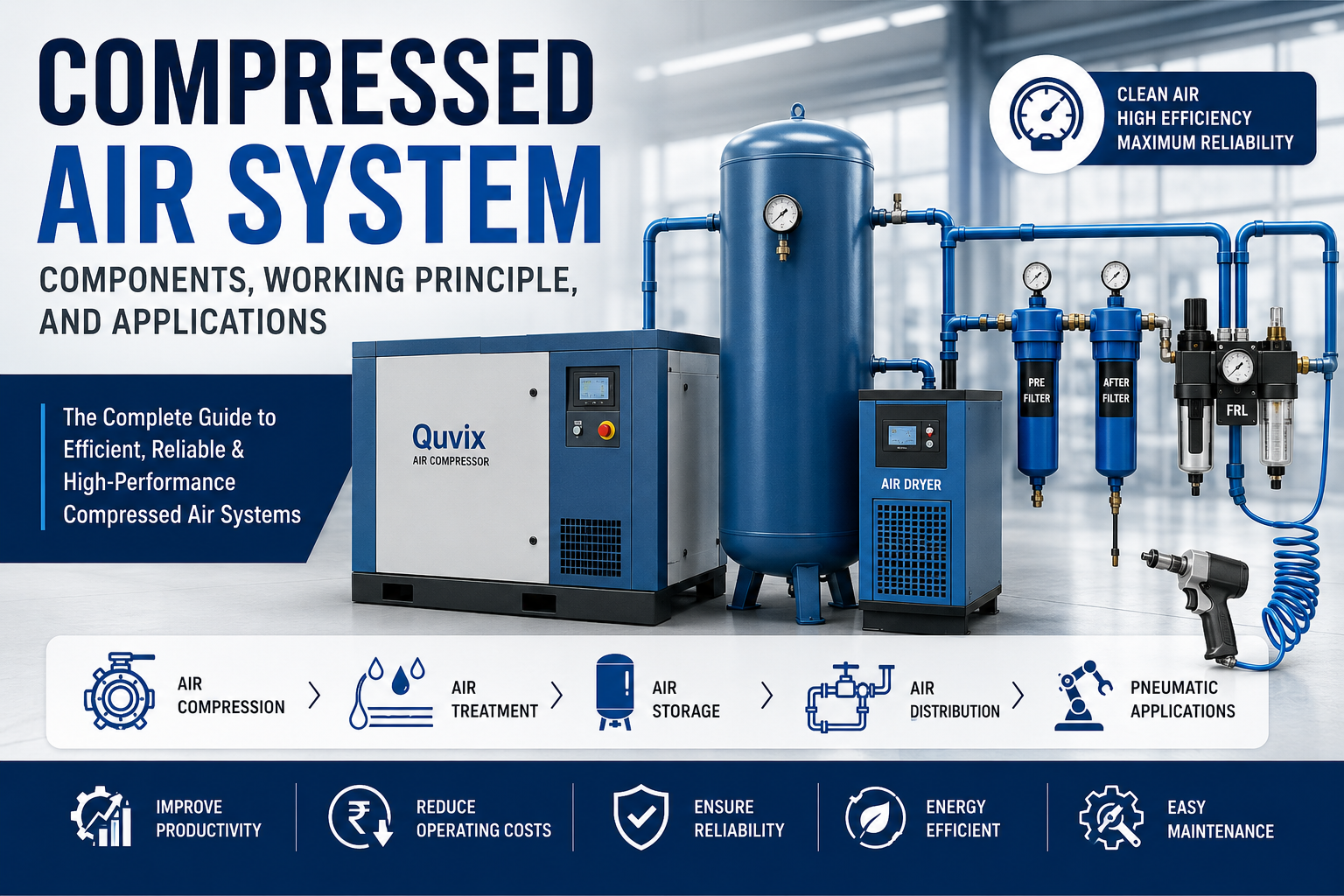
Compressed Air System: Components, Working Principle, and Applications
Compressed air is one of the most important utilities used across modern industries. From powering pneumatic tools and production equipment to operating automated machinery, compressed air systems play a vital role in improving productivity, efficiency, and operational reliability. Often referred to as the “fourth utility” after electricity, water, and natural gas, compressed air has become an essential resource for manufacturing facilities worldwide.
A well-designed compressed air system does much more than simply compress air. It ensures clean, dry, and stable compressed air reaches every machine and production line with minimal pressure loss. An efficient system helps reduce energy consumption, improve equipment performance, extend machine life, and lower maintenance costs.
Whether you’re setting up a new manufacturing plant or upgrading an existing compressed air network, understanding how a compressed air system works is essential for making informed decisions.
In this guide, we’ll explain the working principle of a compressed air system, its major components, industrial applications, and best practices for maintaining maximum efficiency.
According to Atlas Copco, compressed air is widely recognized as the fourth utility in modern industry because of its importance in powering industrial operations efficiently and reliably.
What Is a Compressed Air System?
A compressed air system is an integrated network of equipment that generates, treats, stores, and distributes compressed air for industrial and commercial applications. The system converts atmospheric air into pressurized air, making it available whenever production equipment requires a reliable power source.
Unlike electrical systems, compressed air systems use stored energy in the form of pressurized air to operate various pneumatic tools, machinery, automation systems, and manufacturing equipment.
A complete compressed air system consists of several interconnected components that work together to ensure clean, dry, and consistent airflow throughout the facility.
Typical industries using compressed air systems include:
- Manufacturing
- Automotive
- Pharmaceutical
- Food & Beverage
- Textile
- Electronics
- Construction
- Packaging
- Chemical Processing
- Metal Fabrication
Why Compressed Air Systems Are Important
A properly designed compressed air system offers several operational and financial advantages.
Improved Productivity
Reliable compressed air ensures uninterrupted production and reduces equipment downtime.
Energy Efficiency
Modern compressors, air dryers, and filtration systems reduce unnecessary energy losses and improve operating efficiency.
Better Product Quality
Clean and dry compressed air prevents contamination, making it suitable for food processing, pharmaceutical manufacturing, and electronics production.
Lower Maintenance Costs
Proper air treatment reduces moisture, dust, and oil contamination, protecting downstream equipment.
Increased Equipment Lifespan
Stable air pressure and clean compressed air reduce wear on pneumatic tools and industrial machinery.
How Does a Compressed Air System Work?
A compressed air system follows a series of carefully designed processes to convert atmospheric air into usable compressed air.
Step 1: Air Intake
The process begins by drawing atmospheric air into the compressor through an intake filter. The filter removes dust, dirt, and other airborne particles before compression begins.
Clean intake air improves compressor efficiency and protects internal components from premature wear.
Step 2: Air Compression
The air compressor compresses atmospheric air, increasing its pressure significantly.
Depending on the application, businesses may use:
- Rotary Screw Air Compressors
- Piston Air Compressors
- Oil-Free Air Compressors
- Oil-Lubricated Air Compressors
The compressed air generated at this stage is hot and contains moisture that must be removed before use.
Step 3: Air Treatment
After compression, the air passes through an air treatment system designed to improve air quality.
Air treatment typically includes:
- Refrigerated or Desiccant Air Dryers
- Pre-Filters
- After-Filters
- Oil Removal Filters
- Moisture Separators
These components remove water vapor, oil particles, and contaminants to ensure clean compressed air.
Step 4: Air Storage
The treated compressed air is stored in an air receiver tank.
The receiver tank helps:
- Maintain stable pressure
- Reduce compressor cycling
- Handle peak air demand
- Improve overall system efficiency
Step 5: Air Distribution
Compressed air is distributed throughout the facility using aluminum piping or other compressed air piping systems.
A properly designed distribution network minimizes pressure drop and ensures consistent airflow at every workstation.
Step 6: End-Use Equipment
Finally, compressed air reaches the point of use where it powers:
- Pneumatic tools
- Production machinery
- CNC machines
- Packaging equipment
- Robotic systems
- Spray painting equipment
- Automation systems
At the point of use, FRL (Filter, Regulator, Lubricator) units condition the air before it enters sensitive pneumatic equipment.
Main Components of a Compressed Air System
Every compressed air system consists of several essential components working together to deliver clean and reliable compressed air.
Air Compressor
The compressor is the heart of the system. It converts atmospheric air into high-pressure compressed air suitable for industrial use.
Air Receiver Tank
The receiver tank stores compressed air and stabilizes system pressure during varying production demands.
Air Dryer
Air dryers remove moisture from compressed air, preventing corrosion, equipment damage, and product contamination.
Compressed Air Filters
Filters remove dust, oil aerosols, and other contaminants, ensuring high air quality for industrial applications.
FRL Unit (Filter, Regulator, Lubricator)
FRL units regulate pressure, remove remaining impurities, and provide lubrication where required for pneumatic equipment.
Aluminum Piping System
High-quality aluminum piping distributes compressed air efficiently while minimizing pressure loss and corrosion.
Pressure Gauges and Safety Valves
These components monitor operating pressure and protect the system from overpressure conditions.
Compressed Air System Diagram
A compressed air system follows a structured flow to ensure clean, dry, and efficient compressed air reaches every point of use.
System Flow:
Air Intake → Air Compressor → Air Dryer → Air Filters → Air Receiver Tank → Aluminum Piping → FRL Unit → Pneumatic Equipment
This sequence ensures contaminants, moisture, and oil are removed before compressed air reaches production equipment, improving efficiency and equipment lifespan.
Applications of Compressed Air Systems
Compressed air systems are used across almost every major industry because they provide a reliable, efficient, and safe source of power for pneumatic equipment and automation.
Manufacturing Industry
Manufacturing plants use compressed air systems to power production machinery, CNC machines, assembly lines, robotic systems, and material handling equipment. A reliable compressed air supply improves productivity and minimizes production downtime.
Automotive Industry
Automotive workshops and manufacturing facilities use compressed air for spray painting, tire inflation, pneumatic tools, welding support, and automated production lines.
Food and Beverage Industry
Oil-free compressed air systems are widely used in food processing and packaging to maintain product quality and comply with hygiene standards. Clean and dry compressed air prevents contamination during production.
Pharmaceutical Industry
The pharmaceutical sector requires contamination-free compressed air for tablet manufacturing, packaging, laboratory equipment, and cleanroom operations. Air treatment systems and high-efficiency filtration play a crucial role in these applications.
Textile Industry
Textile manufacturers rely on compressed air for weaving machines, spinning equipment, pneumatic controls, and automated material handling systems.
Construction Industry
Construction companies use portable air compressors to operate jackhammers, drilling equipment, sandblasting machines, and other heavy-duty pneumatic tools.
Benefits of a Well-Designed Compressed Air System
Investing in a properly designed compressed air system offers long-term operational and financial advantages.
Improved Energy Efficiency
Modern compressors, air dryers, and optimized piping systems reduce pressure losses and lower electricity consumption.
Reduced Operating Costs
Preventing air leaks and maintaining proper system pressure significantly reduces energy costs and maintenance expenses.
Higher Productivity
Reliable compressed air ensures uninterrupted production and consistent equipment performance.
Better Air Quality
Advanced air treatment systems remove moisture, dust, and oil contaminants, ensuring clean compressed air for sensitive industrial applications.
Extended Equipment Lifespan
Clean, dry air reduces wear on pneumatic tools, valves, cylinders, and production machinery.
Improved Workplace Safety
Stable air pressure and reliable equipment operation reduce the risk of accidents and unexpected equipment failures.
Common Problems in Compressed Air Systems
Even a well-designed compressed air system can experience performance issues if maintenance is neglected.
Air Leaks
Air leaks are among the most common causes of energy loss. Regular leak inspections can significantly improve system efficiency.
Pressure Drop
Undersized piping, clogged filters, or excessive air demand may cause pressure drops that reduce equipment performance.
Excessive Moisture
Poor drying systems allow moisture to enter pipelines, leading to corrosion, damaged equipment, and reduced product quality.
Dirty Filters
Blocked filters restrict airflow, increase compressor workload, and raise electricity consumption.
Incorrect Compressor Sizing
Using an oversized or undersized compressor reduces efficiency and increases operating costs.
Maintenance Tips for Compressed Air Systems
Routine maintenance is essential for maintaining maximum system efficiency and reliability.
Inspect Air Filters Regularly
Replace clogged filters to maintain proper airflow and reduce energy consumption.
Drain Moisture from Air Receiver Tanks
Regular moisture drainage prevents corrosion and protects downstream equipment.
Monitor System Pressure
Maintain the recommended operating pressure to improve efficiency and reduce unnecessary compressor load.
Check for Air Leaks
Inspect pipelines, fittings, and hoses periodically to prevent compressed air loss.
Service Air Dryers
Maintain refrigerated or desiccant air dryers according to the manufacturer’s recommendations.
Schedule Preventive Maintenance
Implement a preventive maintenance program to identify potential issues before they lead to costly breakdowns.
Conclusion
A compressed air system is much more than just an air compressor. It is a complete network of compressors, air dryers, filters, receiver tanks, piping systems, and pneumatic equipment working together to deliver clean, reliable, and efficient compressed air.
Understanding each component and following proper maintenance practices can improve productivity, reduce operating costs, and extend equipment lifespan. Whether you operate a manufacturing facility, automotive workshop, pharmaceutical plant, or food processing unit, investing in a well-designed compressed air system ensures long-term operational success.