
Compressed Air Filters: Types, Working Principle, and Applications
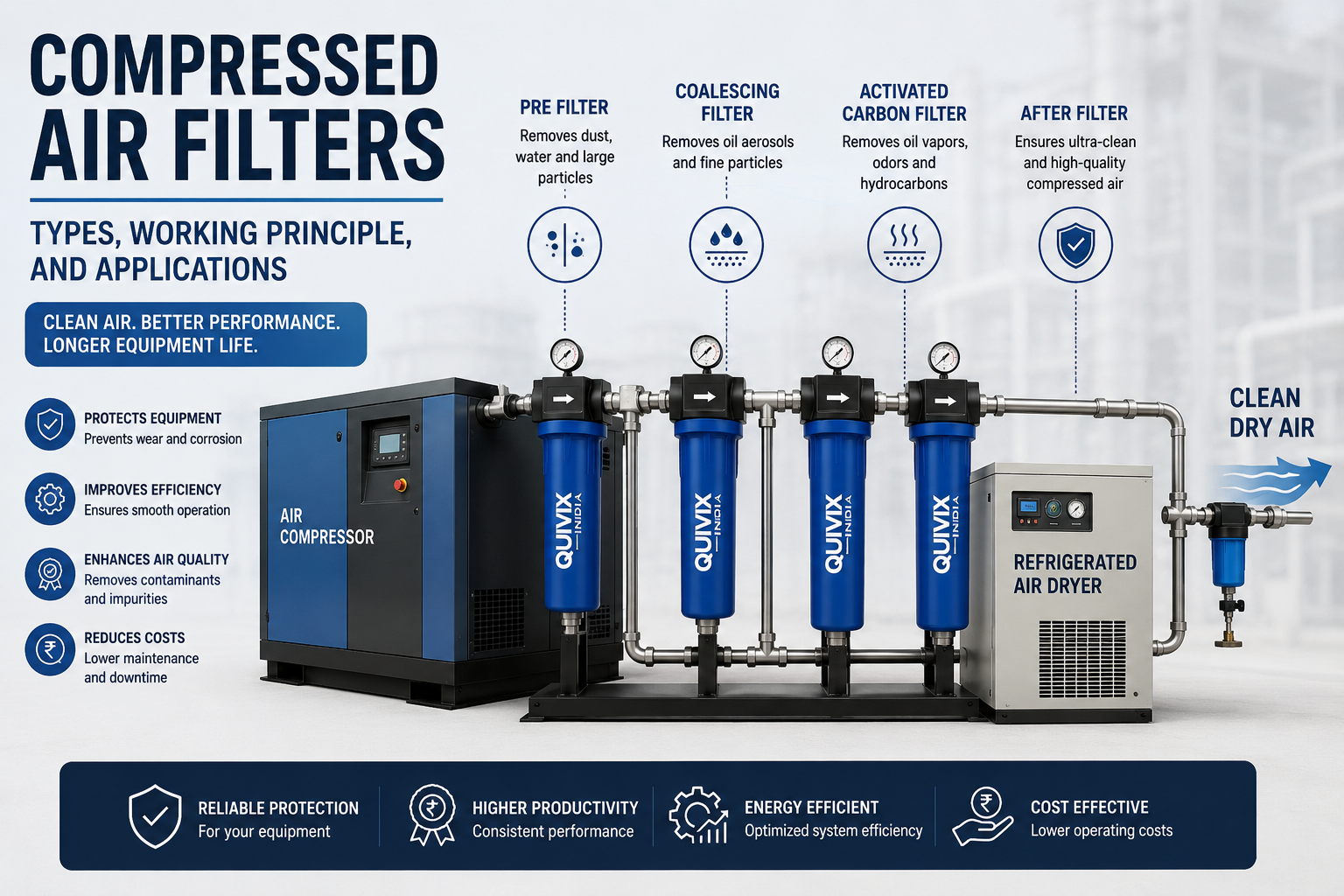
Compressed Air Filters: Types, Working Principle, and Applications
Compressed air is widely used across industries to power pneumatic tools, production equipment, automation systems, and manufacturing processes. However, the air produced by an air compressor is not completely clean. It often contains dust particles, moisture, oil aerosols, microorganisms, and other contaminants that can reduce equipment performance and affect product quality.
Compressed Air Filters play a critical role in removing these impurities before compressed air reaches the point of use. A properly designed filtration system protects downstream equipment, improves air quality, reduces maintenance costs, and extends the lifespan of the entire compressed air system.
Whether you’re operating a manufacturing facility, pharmaceutical plant, food processing unit, or automotive workshop, selecting the right compressed air filter is essential for ensuring reliable and efficient operation.
In this guide, we’ll explain how compressed air filters work, explore the different types of compressed air filters, discuss their industrial applications, and provide maintenance tips to help maximize system performance.
According to Atlas Copco, effective compressed air filtration is essential for protecting compressed air systems, reducing energy losses, and maintaining consistent air quality.
What Are Compressed Air Filters?
Compressed air filters are air treatment devices designed to remove solid particles, water droplets, oil aerosols, vapors, and other contaminants from compressed air before it reaches pneumatic equipment or production machinery.
During the compression process, atmospheric air carries dust, moisture, and microscopic particles into the compressed air system. Without proper filtration, these contaminants can cause corrosion, equipment wear, clogged valves, poor product quality, and increased maintenance costs.
Modern industrial compressed air systems typically use multiple stages of filtration to ensure clean and reliable compressed air for various applications.
Why Air Filtration Is Important
A high-quality compressed air filtration system provides several important benefits.
Protects Industrial Equipment
Clean compressed air prevents contaminants from damaging pneumatic cylinders, valves, actuators, and production machinery.
Improves Product Quality
Industries such as pharmaceuticals, food and beverage, and electronics require contamination-free compressed air to maintain strict quality standards.
Reduces Maintenance Costs
Removing dust, moisture, and oil particles reduces wear on equipment and minimizes unexpected downtime.
Improves Energy Efficiency
Clean filters maintain proper airflow and reduce pressure drop, helping compressors operate more efficiently.
Extends Equipment Lifespan
A well-maintained filtration system protects downstream equipment from premature wear and corrosion.
How Do Compressed Air Filters Work?
Compressed air filters use specialized filtration media to separate contaminants from compressed air before it enters the distribution system.
The filtration process generally occurs in several stages.
Particle Removal
Particulate filters capture dust, rust, scale, and other solid particles suspended in compressed air.
These filters protect downstream equipment from abrasion and mechanical damage.
Oil Removal
Coalescing filters remove fine oil aerosols by combining tiny oil droplets into larger droplets that can be separated and drained from the system.
This process significantly improves compressed air quality.
Moisture Removal
Although air dryers remove most moisture, compressed air filters also capture remaining water droplets before compressed air reaches sensitive equipment.
This helps prevent corrosion and improves system reliability.
Vapor Removal
Activated carbon filters absorb oil vapors, odors, and hydrocarbons that cannot be removed by conventional coalescing filters.
These filters are commonly used where extremely clean compressed air is required.
Types of Compressed Air Filters
Different industrial applications require different levels of air purity. For this reason, several types of compressed air filters are used within a compressed air system.
Particulate Filters
Particulate filters remove dust, dirt, rust particles, pipe scale, and other solid contaminants from compressed air.
They are usually installed as the first stage of filtration.
Advantages
- Removes solid particles
- Protects downstream equipment
- Improves airflow
- Low maintenance
Coalescing Filters
Coalescing filters are designed to remove extremely fine oil aerosols and microscopic water droplets.
They are among the most important filters used in industrial compressed air systems.
Advantages
- Removes oil aerosols
- Removes fine moisture
- Improves air purity
- Protects sensitive equipment
Activated Carbon Filters
Activated carbon filters remove oil vapors, odors, and volatile hydrocarbons from compressed air.
They are commonly used after coalescing filters where high air purity is required.
Advantages
- Removes oil vapor
- Eliminates odor
- Provides clean compressed air
- Suitable for food and pharmaceutical industries
High-Efficiency Filters
High-efficiency filters capture extremely small particles that standard filters cannot remove.
These filters are used in precision manufacturing and critical industrial processes.
Advantages
- High filtration efficiency
- Protects precision equipment
- Improves air quality
- Suitable for sensitive industries
Sterile Filters
Sterile filters are designed for industries requiring bacteria-free compressed air.
They are commonly used in pharmaceutical manufacturing, biotechnology, and food processing facilities.
Advantages
- Removes microorganisms
- Maintains sterile air
- Supports hygienic production
- Complies with strict industry standards
Applications of Compressed Air Filters
Compressed air filters are used across a wide range of industries to maintain air quality, protect equipment, and ensure reliable production processes.
Manufacturing Industry
Manufacturing plants use compressed air filters to remove dust, oil aerosols, and moisture before compressed air reaches production equipment. Clean compressed air improves machine performance and reduces maintenance costs.
Automotive Industry
Automotive workshops and manufacturing facilities rely on compressed air filters for spray painting, pneumatic tools, robotic assembly lines, and tire inflation systems. Proper filtration prevents contamination and extends equipment life.
Food and Beverage Industry
Food processing plants require clean, oil-free compressed air to maintain product quality and comply with food safety regulations. High-efficiency and activated carbon filters help remove contaminants and unwanted odors.
Pharmaceutical Industry
Pharmaceutical manufacturers require sterile and contamination-free compressed air for tablet production, packaging, laboratory equipment, and cleanroom environments. Multiple stages of filtration ensure compliance with strict quality standards.
Electronics Industry
Electronics manufacturing demands extremely clean compressed air to protect delicate electronic components from dust, oil, and moisture contamination.
Chemical Industry
Compressed air filters are used in chemical processing plants to protect pneumatic control systems and maintain reliable operation in demanding environments.
Benefits of Compressed Air Filters
Installing the correct compressed air filters provides several operational and financial advantages.
Improved Air Quality
Compressed air filters remove particles, oil aerosols, moisture, and odors, ensuring clean compressed air for industrial applications.
Protection for Equipment
Clean air minimizes wear on valves, cylinders, pneumatic tools, and automation equipment, extending their service life.
Reduced Maintenance Costs
Effective filtration decreases equipment failures, reduces downtime, and lowers maintenance expenses.
Increased Energy Efficiency
Clean filters reduce pressure drop and allow compressors to operate more efficiently, helping lower electricity consumption.
Better Product Quality
Industries such as food processing, pharmaceuticals, and electronics depend on clean compressed air to maintain high product quality.
Longer Equipment Lifespan
By preventing contaminants from entering downstream equipment, compressed air filters improve the durability and reliability of the entire compressed air system.
How to Choose the Right Compressed Air Filter
Selecting the right compressed air filter depends on your application, air quality requirements, and operating conditions.
Consider the following factors before choosing a filter:
- Required air purity level
- Operating pressure
- Air flow capacity
- Type of contaminants present
- Industry standards and compliance requirements
- Maintenance requirements
- Pressure drop across the filter
- Total operating cost
For critical industries such as pharmaceuticals and food processing, multi-stage filtration systems are generally recommended.
Maintenance Tips for Compressed Air Filters
Regular maintenance ensures optimal filtration performance and extends equipment life.
Replace Filter Elements on Time
Dirty filter elements increase pressure drop and reduce filtration efficiency. Always replace filter cartridges according to the manufacturer’s recommendations.
Monitor Pressure Drop
A significant increase in pressure drop usually indicates that the filter element requires replacement.
Drain Condensate Regularly
Remove accumulated moisture from filter housings to prevent corrosion and maintain filtration efficiency.
Inspect Filter Housings
Check housings for leaks, cracks, or physical damage during routine maintenance.
Follow Preventive Maintenance Schedules
Routine inspections reduce unexpected failures and improve compressed air system reliability.
Common Problems with Compressed Air Filters
Improper maintenance or incorrect filter selection can reduce system performance.
Clogged Filter Elements
Blocked filters restrict airflow, increase compressor workload, and raise energy consumption.
Excessive Pressure Drop
Dirty filters create higher resistance, reducing compressed air efficiency.
Oil Carryover
Damaged coalescing filters may allow oil aerosols to pass into downstream equipment.
Moisture Contamination
Poor filtration combined with inadequate air drying can introduce moisture into pneumatic systems.
Incorrect Filter Selection
Using the wrong filter type may result in poor air quality and reduced equipment protection.
Conclusion
Compressed air filters are an essential part of every industrial compressed air system. They remove particles, oil aerosols, moisture, and contaminants that could otherwise damage equipment and reduce product quality.
By selecting the right combination of particulate filters, coalescing filters, activated carbon filters, and high-efficiency filters, businesses can improve air quality, reduce operating costs, extend equipment lifespan, and increase overall system efficiency.
Whether you operate a manufacturing plant, pharmaceutical facility, food processing unit, or automotive workshop, investing in high-quality compressed air filtration helps ensure reliable and efficient production.